Happy Baloo Typeface Review for Playful Editorial Design
I remember the exact moment I realized my lifestyle blog’s header needed a complete personality overhaul. For years, I had relied on safe, geometric sans-serifs that felt clean but utterly forgettable. The site was functional, yes, but it lacked the warmth and approachability that defined the content inside. I was redesigning a series of printable planners and digital worksheets aimed at young families, and the existing typography felt too corporate, too stiff. It didn’t match the whimsical, hands-on nature of the activities we were sharing. That was when I stopped scrolling through generic font libraries and started looking for something with genuine character. I found Happy Baloo, and it immediately shifted the entire mood of the project from "instructional" to "inviting."
This review explores how Happy Baloo functions not just as a decorative element, but as a strategic tool for editorial design. By examining its visual rhythm, uppercase-only structure, and specific use cases, we can determine how this display font supports readability, publication identity, and audience engagement in real-world publishing scenarios.
Why Happy Baloo Works for Children’s Craft and Educational Printables
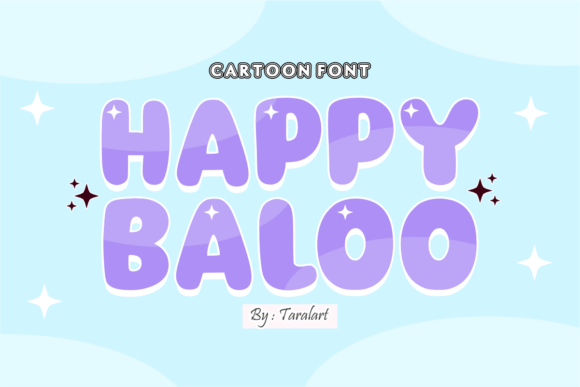
The core strength of Happy Baloo lies in its deliberate simplicity and charm. Introducing “Happy Baloo” is a bold and modern cartoon font, consisting of only uppercase letters. Each character is cute, unique, and sweet, making it easy to recognize. This specific combination of traits makes it an exceptional choice for children’s craft projects, educational worksheets, and activity guides where clarity and joy are paramount. Unlike complex script fonts or dense serif typefaces that can strain young eyes or feel overly formal, Happy Baloo offers immediate legibility without sacrificing personality.
In my testing, I used this font for a series of coloring book titles and step-by-step instruction headers for a kids’ activity ebook. Because every letter is uppercase, there is no ambiguity about word shapes. The consistent height and rounded edges create a friendly visual hierarchy that guides the reader’s eye naturally down the page. For creators selling digital downloads on platforms like Etsy or Teachers Pay Teachers, this level of instant recognition is crucial. Parents scanning a product page need to feel the tone of the material within seconds; Happy Baloo communicates fun and accessibility before the user even reads the description. Its status as a Display font means it is designed to be seen, not read in bulk, which aligns perfectly with the structural needs of short-form instructional content.
Editorial Mood and Brand Identity in Digital Newsletters
Moving beyond printables, I tested Happy Baloo in a weekly creator newsletter dedicated to mindful parenting. Newsletters often struggle to balance professionalism with personal connection. Using a standard body font for headers can feel dry, while using a handwritten font can sometimes appear unpolished. Happy Baloo strikes a middle ground: it feels curated and intentional, yet relaxed. When placed above the main article summary, it acts as a visual anchor, signaling to the subscriber that the content inside is lighthearted and engaging.
The font’s bold weight ensures it stands out against busy backgrounds, a common challenge in email design. However, because it is strictly uppercase, it requires careful spacing management. In my layout tests, generous tracking (letter-spacing) prevented the letters from feeling cramped, allowing each unique character shape to breathe. This attention to detail elevates the perceived value of the newsletter. Readers subconsciously associate high-quality typographic choices with trustworthy content. By using Happy Baloo for section dividers or pull quotes, the editorial design gains a cohesive brand identity that feels distinct from the sea of generic templates available online. It transforms a simple text update into a branded experience.
Pull Quotes and Chapter Openers in Ebook Layouts
One of the most effective uses I discovered for this typeface is in long-form digital books, such as coaching workbooks or illustrated guides. In these formats, breaking up large blocks of text is essential for maintaining reader retention. Happy Baloo serves as an excellent alternative to traditional drop caps or standard bold headers for chapter openers. Its cartoonish yet modern aesthetic adds a layer of visual interest that keeps the reader engaged during transitions between topics.
For pull quotes—short, impactful excerpts pulled from the main text—Happy Baloo provides enough visual weight to command attention without overwhelming the surrounding paragraph. When paired with a clean, neutral background, the font becomes the star of the layout. This is particularly useful in PDF exports and interactive ebooks where static images cannot be used. The font itself becomes the graphic element, reducing file size while increasing stylistic impact. It proves that a creative font can serve a functional purpose by directing the reader’s focus to key takeaways.
Readability Considerations and Font Pairing Strategies
While Happy Baloo is visually striking, understanding its limitations is just as important as knowing its strengths. As a Display font, it is not suitable for body copy, small captions, or dense paragraphs. The uppercase-only constraint and the unique shape of each character can cause reading fatigue if used for extended periods. The brain processes lowercase text more efficiently due to the varied ascenders and descenders that create recognizable word contours. Therefore, the primary rule for using Happy Baloo is contrast: pair it with a highly readable serif font for body text or a clean sans serif font for navigation and metadata.
In my recent magazine layout project, I paired Happy Baloo with a classic Georgia-style serif for the article body. The juxtaposition worked beautifully; the playful header drew the eye in, while the reliable serif carried the narrative load. This pairing respects the hierarchy of information. The header announces the topic with enthusiasm, and the body delivers the substance with clarity. Additionally, when designing for mobile layouts, the bold weight of Happy Baloo remains crisp at smaller sizes, provided it is not scaled down too drastically. Testing on various screen sizes confirmed that the font maintains its sweet, recognizable character even on narrower viewports, making it a versatile asset for responsive web design.
Commercial Licensing and Technical Specifications
Before integrating Happy Baloo into any client publication or commercial template, it is vital to verify the licensing terms. Most premium fonts come with specific guidelines regarding usage in digital products, print runs, and resale rights. Ensure that the license covers your intended use case, whether that is embedding the font in a PDF workbook, using it in social media graphics, or applying it to physical packaging for a craft kit. Checking for included styles, alternates, and ligatures can also expand your design possibilities. While Happy Baloo is uppercase-only, some versions may include special punctuation marks or decorative symbols that enhance the overall layout.
Furthermore, consider the file formats provided. TrueType (.ttf) and OpenType (.otf) files offer broad compatibility across design software like Adobe InDesign, Illustrator, and Canva. Having access to these formats ensures that you can edit the text directly, adjust kerning, and integrate the font seamlessly into your workflow. For designers creating scalable assets, verifying multilingual support is also prudent, although the uppercase nature of Happy Baloo suggests it may be optimized primarily for English-language markets. Always prioritize commercial font licensing that protects your intellectual property and allows for professional distribution.
Final Verdict on Happy Baloo for Modern Content Creators
Happy Baloo is more than just a cute font; it is a strategic design asset for anyone looking to inject warmth and clarity into their editorial work. Its bold, modern cartoon style, combined with its easy-to-read uppercase characters, makes it ideal for headlines, titles, and decorative accents in children’s crafts, educational materials, and lifestyle branding. By respecting its role as a display font and pairing it with stable body text, designers can create layouts that are both visually appealing and highly readable. For bloggers, publishers, and independent creators seeking to establish a distinctive and approachable publication identity, Happy Baloo offers a reliable solution that enhances content structure and engages readers on an emotional level.