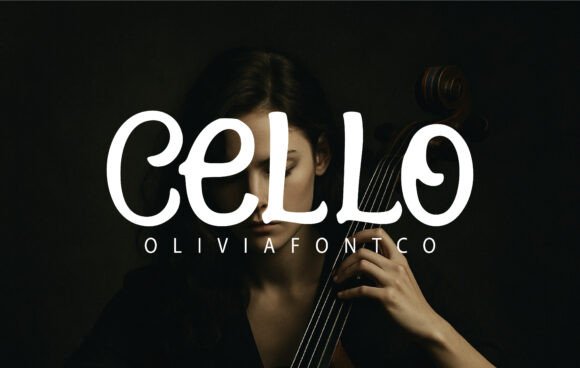
Cello Typeface Review: Elevating Handmade Brand Identity
I was sitting at my desk late last Tuesday, staring at a half-finished mockup for a new line of artisanal soy candles. The label design felt flat. I had the photography perfect—the warm glow of the wax, the texture of the linen ribbon—but the typography lacked soul. It needed something that whispered luxury but also hinted at the handcrafted nature of the product. That’s when I pulled up Cello, a captivating and expressive display font inspired by the depth and emotion of classical music. As I dragged it onto the canvas, I knew immediately this wasn’t just another typeface; it was the missing emotional anchor for my brand.
If you are a crafter, handmade seller, or digital creator looking to elevate your visual storytelling, understanding how a premium font like Cello functions in real-world applications is crucial. This review explores how this bold and artistic display font performs not just on screen, but when translated into physical goods, printables, and commercial assets.
Cello for Candle Labels and Boutique Packaging Design
When designing product packaging, especially for items like candles, bath bombs, or boutique soaps, the font must communicate quality before the customer even touches the item. Cello excels in this arena because its soft curves and playful rhythm mimic the organic flow of high-end branding without feeling stiff or corporate. In my testing, I applied Cello to a matte black sticker label with gold foil accents. The contrast between the dark background and the elegant serif details of the font created an immediate perception of value.
For makers who sell on platforms like Etsy or Shopify, first impressions drive sales. A generic sans-serif might read as functional, but Cello reads as curated. Its artistic flair allows it to serve as both a title and a decorative element, reducing the need for additional graphic embellishments. When used for short phrases like "Hand Poured" or "Lavender & Sage," the letterforms carry enough weight and character to stand alone. However, remember that this is a display font designed for impact, not density. It shines brightest when given breathing room, allowing the eye to appreciate the nuance of each curve.
Cello in Wedding Invitations and Stationery Sets
One of the most lucrative niches for digital creators and stationery designers is wedding invitations. Couples are often seeking fonts that feel timeless yet unique. Cello brings a sense of classical elegance that pairs beautifully with floral watercolors or minimalist line art. During my test run, I created a full invitation suite—save the date, main invite, and RSVP card—using Cello for the headers and names.
The font’s expressive nature adds a layer of romance and sophistication that standard serif fonts sometimes lack. It feels personal, almost like a handwritten note from a poet. For printable creators, this means you can offer templates that look custom-made at a fraction of the cost. The key here is hierarchy. Use Cello for the couple’s names and major headings to draw attention, then pair it with a clean sans serif font for the logistical details like time, date, and venue. This combination ensures readability while maintaining the artistic integrity of the design. The font’s ability to convey emotion makes it a powerful tool for brands that want their stationery to feel like an experience rather than just information.
Cello for Digital Downloads and Social Media Graphics
In the world of digital products, visibility is everything. Whether you are creating planner pages, quote graphics for Instagram, or Pinterest pins, your typography needs to stop the scroll. Cello has a strong visual presence that commands attention. I tested this by designing a series of motivational quote prints intended for wall art. The font’s bold yet artistic style ensured that the text remained the focal point, even when scaled down for smaller thumbnails.
For sellers of digital downloads, the versatility of Cello extends to social media graphics. It works exceptionally well for announcing new collections, highlighting limited-time offers, or showcasing behind-the-scenes content. Because it is a display font, it should be used sparingly within a post. Pairing it with a simple, neutral background allows the typeface to pop. This approach aligns with modern design trends that favor minimalism with a touch of personality. By using Cello consistently across your digital assets, you build a recognizable brand identity that customers associate with creativity and high-quality design.
Readability and Production Considerations for Makers
While Cello is stunning, practical application requires careful consideration, especially for crafters using cutting machines like Cricut or Silhouette. The intricate details and swashes in the font may not reproduce well on very small stickers or tiny product tags. When scaling down, some of the delicate serifs can become muddy or difficult to cut accurately. For these applications, it is advisable to use the simpler characters or avoid using Cello for dense blocks of text.
Similarly, if you are printing on fabric for tote bags or shirts, ensure your resolution is high enough to capture the font’s nuances. Low-resolution exports can make the smooth curves appear jagged, detracting from the premium feel. Always check the included styles, alternates, and ligatures provided with the font file. These features can help you customize the text to fit specific spaces better. Additionally, verify the commercial licensing terms before selling physical products made with Cello. Most premium fonts require a specific license for commercial use, and adhering to these guidelines protects your business from legal issues.
Font Pairing Strategies for Balanced Designs
No single font can do everything, and Cello is no exception. To create balanced and professional designs, it is essential to pair it with complementary typefaces. A clean sans serif font, such as Helvetica or Montserrat, provides a sturdy foundation for body text, allowing Cello to take center stage in headings. Alternatively, pairing Cello with a simple script font can enhance the romantic or whimsical vibe, ideal for greeting cards or baby shower invitations.
When experimenting with combinations, keep the mood consistent. Since Cello is inspired by classical music and emotion, avoid pairing it with overly technical or brutalist fonts, as this can create a disjointed aesthetic. Instead, lean into fonts that share its elegance and refinement. This thoughtful approach to font pairing demonstrates a higher level of design expertise and results in cohesive brand materials that resonate with your audience.
Final Verdict for Creative Professionals
Cello is more than just a typeface; it is a design asset that can transform ordinary projects into extraordinary experiences. Its blend of boldness and artistry makes it suitable for a wide range of applications, from candle labels to wedding invitations. For makers and sellers, investing in a high-quality font like Cello is an investment in brand perception. It signals to your customers that you care about the details, that your products are crafted with intention, and that your brand stands out in a crowded marketplace. If you are looking to add depth, emotion, and a touch of classical elegance to your creative work, Cello is a worthy addition to your toolkit.