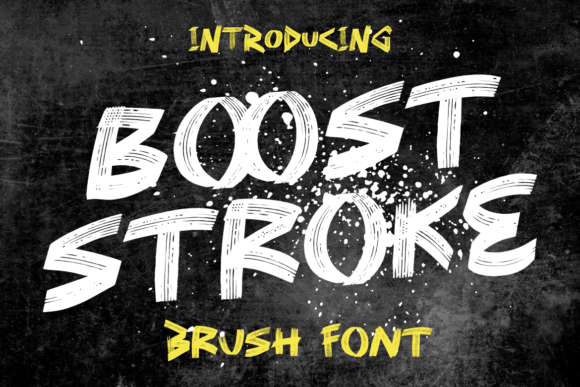
Boost Stroke Typeface for Dynamic Web Headers
I was staring at a blank hero section on a new landing page project, trying to find the right visual hook. The client wanted energy—something that screamed action without feeling chaotic. I had already tested several clean sans serifs, but they felt too corporate. Then I imported Boost Stroke. It wasn’t just another decorative typeface; it immediately injected a rugged, kinetic personality into the layout. As a web designer constantly hunting for fonts that balance aesthetic impact with digital performance, I found this display font to be an unexpected powerhouse for modern brand identities.
The moment I placed the headline text over a dark, high-contrast background image, the difference was palpable. Boost Stroke Brush Font is a bold and expressive typeface inspired by the energy and excitement of sports and action. Its rugged brush texture and dynamic lines create a sense of strength and movement that standard geometric fonts simply cannot replicate. In this article, I’ll walk you through how I integrated this specific Display font into a real-world UI workflow, discussing where it shines, where it needs support, and how it can elevate your next digital product or campaign.
Boost Stroke Hero Section Impact for Sports and Fitness Brands
When designing for niches like fitness, extreme sports, or high-energy lifestyle brands, the typography must match the intensity of the content. Boost Stroke delivers exactly that visceral punch. I used it for the main H1 tag on a coaching website’s homepage, and it commanded attention instantly. The brush-like strokes give it a hand-crafted, authentic feel, which helps build trust with users who value raw effort and dedication over polished perfection.
In a digital context, hero sections are prime real estate. You have seconds to grab a visitor’s interest before they scroll past. Using a heavy Display font like Boost Stroke allows you to communicate mood in milliseconds. However, because the font has such strong visual weight, it works best as a standalone statement rather than body copy. I kept the supporting text in a lightweight, neutral sans serif to ensure the hierarchy remained clear. This contrast between the aggressive headline and the calm body text creates a sophisticated rhythm that guides the eye naturally down the page.
Readability Considerations for Mobile Viewports
One of the first things I checked after applying Boost Stroke was its behavior on smaller screens. While the font looks incredible at large sizes, its textured edges can sometimes blur or pixelate if not rendered correctly. For mobile layouts, I reduced the letter spacing slightly and ensured the line height was generous enough to prevent the brush strokes from visually colliding. It is crucial to test these fonts in actual browser environments, not just design software, to see how the rasterization handles different screen densities.
- Size Matters: Keep Boost Stroke above 24px for optimal legibility on desktops and 18px minimum on mobile devices.
- Contrast is Key: Ensure high contrast between the font color and the background. Dark gray on white or bright white on black works best to preserve the texture details.
- Avoid Crowding: Do not use this font for long paragraphs. Reserve it for headlines, subheads, and short accent phrases.
Boost Stroke Button and Call-to-Action Design Strategies
A common mistake designers make is using decorative fonts for interactive elements like buttons. While Boost Stroke is undeniably striking, using it for small Call-to-Action (CTA) buttons can hurt usability. The intricate brush details become hard to read when the button shrinks on hover states or mobile taps. Instead, I used Boost Stroke for the primary CTA label only when the button was large and prominent, such as in a mid-page promotional banner.
For smaller navigation links or secondary actions, I stuck to a clean, highly readable sans serif font. This approach maintains the professional integrity of the site while allowing Boost Stroke to serve as a powerful accent. When used sparingly, the font feels like a premium design asset rather than a gimmick. It signals to the user that the action associated with it is important and energetic, aligning the visual language with the intended user behavior.
Pairing Boost Stroke with Clean Sans Serif Fonts
To make Boost Stroke work effectively in a full web design system, pairing is essential. A rough, artistic font needs a stable partner to ground the design. I paired it with a simple, geometric sans serif font for all body copy, forms, and navigation menus. This combination leverages the strengths of both: the sans serif provides clarity and speed of reading, while Boost Stroke provides character and brand differentiation.
This typographic duo works particularly well for editorial designs, blog redesigns, and portfolio sites where the creator wants to show personality without sacrificing readability. By keeping the structural typography neutral, the eye is drawn to the Boost Stroke headers, creating a clear visual path through the content. This strategy enhances user engagement by making the content scannable while still feeling distinctively branded.
Boost Stroke for Digital Marketing Campaigns and Social Graphics
Beyond static website layouts, Boost Stroke proved invaluable for creating cohesive digital marketing assets. I used the same font family for social media banners, email header graphics, and paid ad creatives. Consistency across these touchpoints strengthens brand identity. When a user sees the rugged, dynamic lines of Boost Stroke in an Instagram post, they immediately recognize it as part of the same ecosystem as the website.
The font’s ability to convey "action" makes it ideal for limited-time offers, event announcements, or product launches. It adds a layer of urgency and excitement that flat, standard fonts lack. For course creators and online store owners, using Boost Stroke in promotional banners can increase click-through rates by capturing attention in crowded feeds. Just remember to keep the text concise; let the font do the talking with short, punchy messages.
Licensing and Technical Implementation for Commercial Projects
Before integrating any Display font into a client project, verifying the license is non-negotiable. Boost Stroke comes with specific commercial usage rights that allow for web embedding and digital distribution, which is critical for SaaS founders and agency owners. Always check the included file formats—ensuring you have both TTF/OTF for desktop use and WOFF/WOFF2 for web optimization ensures fast loading times and cross-browser compatibility.
Additionally, consider the multilingual support if your audience is global. Some brush-style fonts may lack extended character sets for accented languages. If your brand operates internationally, verify that Boost Stroke supports the necessary diacritics to maintain professionalism. Properly configuring the @font-face rules in your CSS will help the browser load the correct weights efficiently, preserving the smooth animation and responsiveness of your site.
Boost Stroke for Creative Portfolios and Personal Branding
For freelancers, photographers, and creative directors, your personal brand is your product. Using Boost Stroke in a portfolio header or about section can instantly communicate confidence and creativity. It breaks away from the sterile look of many template-based websites, giving your work a custom-tailored feel. I’ve seen designers use it for their names or key service offerings to create a memorable first impression.
The key is restraint. Use Boost Stroke to highlight your unique value proposition, then let your work speak for itself. When the typography supports rather than overwhelms the portfolio pieces, the result is a polished, high-end experience. Whether you are building a boutique online store or a minimalist blog, incorporating a distinctive Display font like Boost Stroke can be the finishing touch that transforms a good site into a great brand experience.